
The Surprisingly Boring Lives of Extremely Rich People
Feb 04, 2026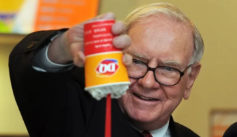
Options over objects - every time.

How's this for a new idea?
Wealth doesn't have to mean palatial houses or diamond-encrusted watches; it can also mean optionality.
I like that flex.
Time, privacy, mobility, freedom, security, peace of mind.
The ability to work on what you want to.
The ability to spend time with the people you love.
The ability to say NO.

Let's take a look at some old-school wealth builders who embody this mindset and whose stories I've enjoyed learning over the years. They've earned enormous sums of money and then made a very deliberate choice to keep their lifestyles... remarkably normal.
Kawhi Leonard
Kawhi has earned well over $200 million in NBA salary alone, yet he drove a 1997 Chevy Tahoe, nicknamed Gas Guzzler, and avoided flash entirely. "It runs." He said, "and it's paid off." He splurges where it matters to him, on training, recovery, and performance. His money fuels excellence, not attention.
Famously, after his $94 million contract kicked in, he panicked when he lost some Wingstop coupons (a sponsor). But don't worry, they generously replenished his supply.
Leonard is one of the most frugal multimillionaires in the NBA, and happy to remain low-key and clip Wingstop coupons. The thing I respect about him is that he doesn't let money define his values. He uses money to protect them.
Warren Buffett
What can we say about Buffett that hasn't been said before?
He is worth north of $150 billion, but he still lives in the same Omaha, NE house he bought in 1958 at 28 years old for $31,500. He spends generously on businesses he believes in and philanthropy that aligns with his values. And continues to eat McDonald's burgers or chicken sandwiches for lunch, with a Coke. I've read he also occasionally splurges on Dairy Queen (which he owns).
Anne Scheiber
Anne earned a modest government salary at the IRS (never more than $4,000 per year), never married, and started investing in 1944 after she retired, with $5,000 in savings. Over the next 50 years, she turned that small nest egg into a $22 million fortune by investing in a diversified portfolio of dividend stocks and consistently living well below her means.
Her frugality wasn't about restriction; it was about independence, and she structured her life so that her money could work for her, not the other way around.
John Urschel
Drafted by the Baltimore Ravens in 2014, Urschel earned millions of dollars over his short NFL career. But he reportedly restricted himself to live on $25,000 per year so he could invest the rest.
No cars.
No massive house.
No diamond-studded wristwatches.
Why? He understood that NFL careers are fragile and short and that money gives you optionality.
And, at the age of 26, he walked away from the NFL entirely, and went to pursue his dream of becoming a PhD mathematician at MIT. He used money to buy him options.
Keanu Reeves
Keanu has earned hundreds of millions from blockbuster films like The Matrix and John Wick and famously (and quietly) gave up a significant portion of his Matrix earnings (well over $100 million) to his costume designers and special effects and stunt teams.
He lives simply and spends lavishly on generosity. His wealth shows up in kindness, not consumption.

Try this bold experiment:
Pick one spending category you won't miss much. Maybe subscriptions, upgrades, hot beverages in the morning, candy, cold beverages with lunch, impulse buys, nails, skincare, fast food ... (I'm just listing things my kids waste money on).
Now redirect that money automatically into an investment account.
Frugality works best when it's invisible and boring. And boring, it turns out, compounds beautifully.
Hit me back and tell me what you redirected.
Stay in the Loop
Continue on your learning journey with our weekly newsletter!
You’ll also be the first to hear about updates on our book launch,
free resources, and you'll get early access to our courses!
We hate SPAM. We will never sell your information, for any reason.